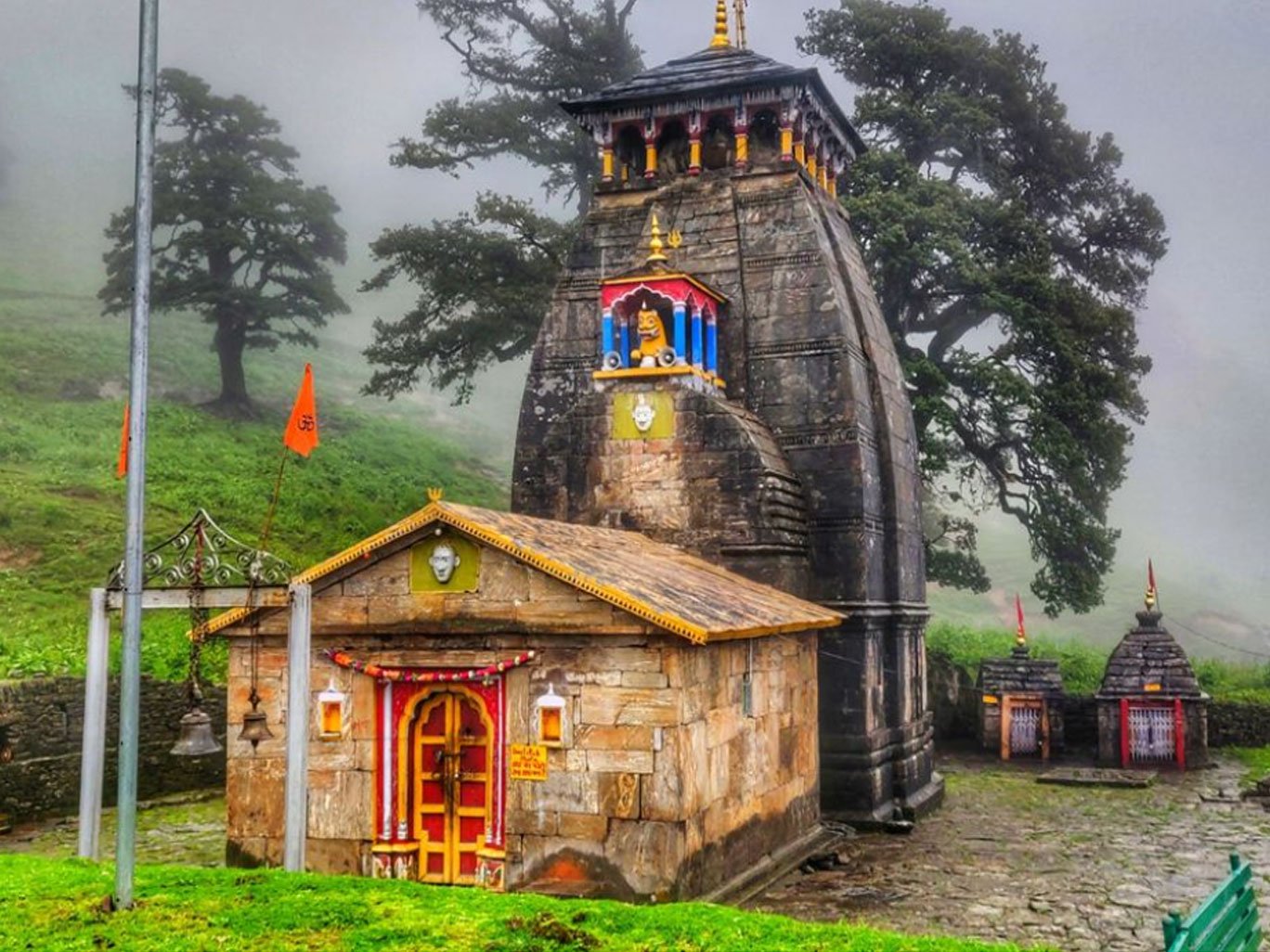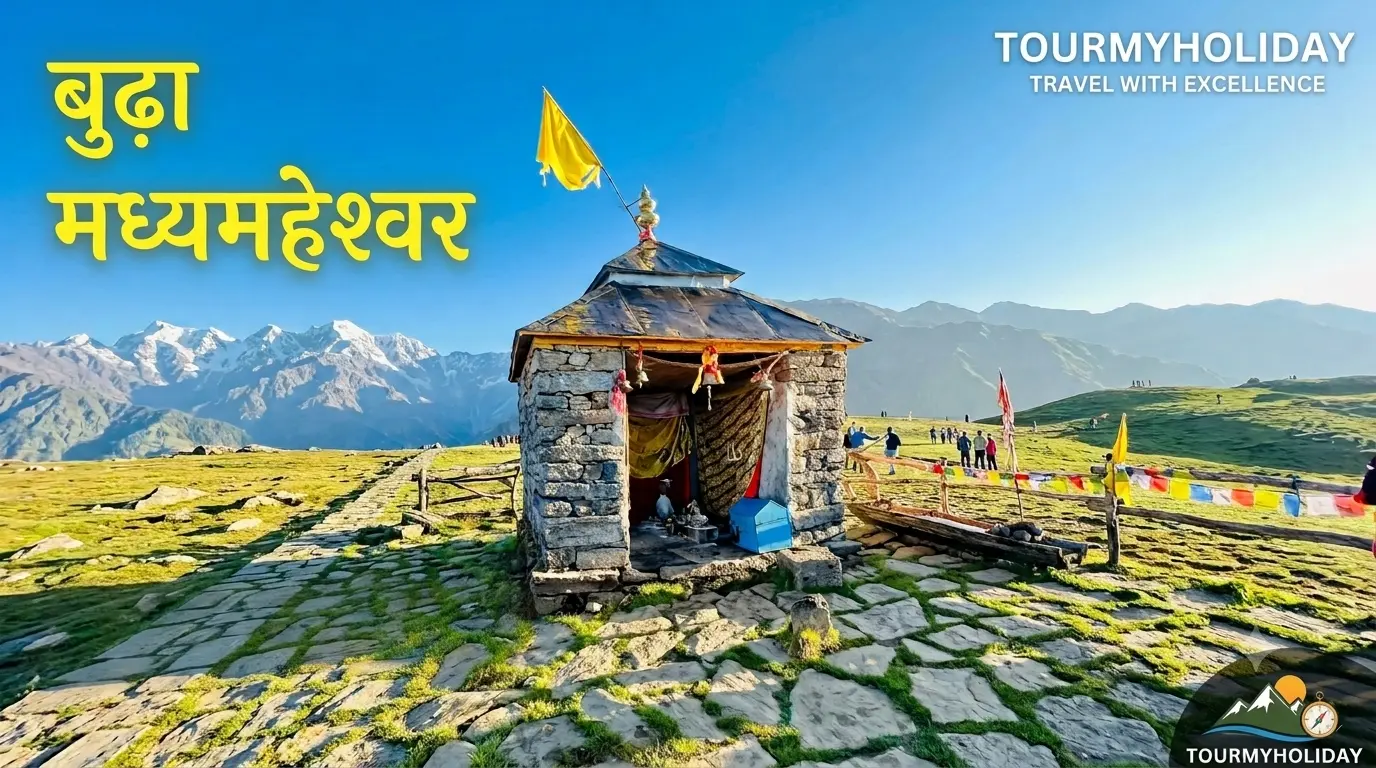
High above the main Madhyamaheshwar Temple, where the forest gives way to open Himalayan meadows, lies one of the most peaceful places on the entire Madhyamaheshwar journey: Budha Madhyamaheshwar Temple.
Also written as Buda Madhyamaheshwar or Budha Madmaheshwar, this sacred place is reached by continuing uphill from the main Madhyamaheshwar shrine. Uttarakhand Tourism describes Budha Madhyamaheshwar as a revered shrine formed from a cluster of rocks and places it around 2 km from Madhyamaheshwar. Local tradition associates the word Budha with "old" or "ancient," reflecting the belief that this shrine predates the present Madhyamaheshwar Temple.
Budha Madhyamaheshwar is also one of the best vantage points in the region for experiencing the surrounding Himalayan landscape. On a clear day, the elevated ridge opens toward an extraordinary sweep of snow-covered peaks and high-altitude meadows.
For travelers who have already completed the main Madhyamaheshwar trek, the additional climb is short in distance but adds an entirely different experience to the pilgrimage.
Budha Madhyamaheshwar Quick Facts
Information | Details |
|---|---|
Location | Above Madhyamaheshwar Temple, Rudraprayag, Uttarakhand |
Distance from Madhyamaheshwar | Around 2 km |
Access | Trekking only |
Shrine Type | Ancient rock-cluster shrine |
Known For | Himalayan views, alpine meadows, sunrise and peaceful surroundings |
Religious Association | Lord Shiva and the Madhyamaheshwar pilgrimage |
Recommended Visit | Early morning in clear weather |
Best Trekking Period | May–June and September–October |
Nearest Main Shrine | Madhyamaheshwar Temple |
Main Trek Base | Ransi Village |
What Is Budha Madhyamaheshwar?
Budha Madhyamaheshwar is a sacred high-altitude site situated above the main Madhyamaheshwar Temple in Uttarakhand's Rudraprayag district.
Unlike the larger stone architecture of the main Madhyamaheshwar shrine, Budha Madhyamaheshwar has a much simpler and more natural character. Official Uttarakhand Tourism describes the shrine as being made from a cluster of rocks, which helps explain why the place feels closely integrated with the surrounding Himalayan landscape rather than separated from it by elaborate architecture.
The journey here is therefore very different from simply visiting another temple building.
Pilgrims leave the main temple complex and climb through an increasingly open landscape until the Madhyamaheshwar valley begins to spread out below them. The isolation, silence and expansive mountain views form a major part of the experience.
Budha Madhyamaheshwar should ideally be visited as an extension of the main Madhyamaheshwar pilgrimage rather than treated as an alternative to it.
Why Is It Called Budha Madhyamaheshwar?
The name itself helps explain the significance of the place.
In this context, Budha or Buda means old or ancient. According to Uttarakhand Tourism, local belief holds that the shrine is older than Madhyamaheshwar, which is why it came to be known as Budha Madhyamaheshwar.
The site's spiritual importance is therefore connected not only with its spectacular location but also with the traditional belief in its antiquity.
It is important, however, to distinguish between established tourism information, religious tradition and stories passed down locally. Precise historical construction dates for the shrine are not firmly documented in the official tourism material.
Travelers interested in the broader Shiva tradition associated with Madhyamaheshwar can read our Panch Kedar Yatra guide rather than repeating the complete Panch Kedar legend here.
Budha Madhyamaheshwar vs Madhyamaheshwar Temple
Although the names are similar, visitors should understand that Madhyamaheshwar Temple and Budha Madhyamaheshwar are separate sites.
Madhyamaheshwar Temple is one of the sacred Panch Kedar shrines dedicated to Lord Shiva and serves as the principal pilgrimage destination in this valley.
Budha Madhyamaheshwar lies farther uphill and is a smaller, more natural shrine associated with a high Himalayan ridge.
The main Madhyamaheshwar Temple is the destination for regular temple worship and darshan, whereas Budha Madhyamaheshwar is especially valued for its ancient character, secluded setting and panoramic mountain environment.
Because the two places serve different visitor intents, travelers should ideally experience both rather than choosing one over the other.
Is Budha Madhyamaheshwar the Winter Temple?
No. Budha Madhyamaheshwar should not be confused with the winter worship location of Madhyamaheshwar.
When the main high-altitude shrine closes for winter, worship associated with Lord Madhyamaheshwar continues at Omkareshwar Temple in Ukhimath.
Budha Madhyamaheshwar is a separate high-altitude sacred site above the main temple.
How to Reach Budha Madhyamaheshwar Temple
You must first reach Madhyamaheshwar Temple.
There is no road leading directly to Budha Madhyamaheshwar.
The broader pilgrimage journey begins from Ransi Village, the roadhead used for the Madhyamaheshwar trekking route. From Ransi, travelers progress through the mountain trail toward settlements such as Gaundhar and Bantoli before eventually reaching Madhyamaheshwar.
Once you reach the main temple, the route to Budha Madhyamaheshwar continues approximately 2 km uphill. Uttarakhand Tourism also lists the Buda Madhyamaheshwar trek among the trekking experiences available around Madhyamaheshwar.
Madhyamaheshwar to Budha Madhyamaheshwar Trek
Although the distance is relatively short, hikers should not judge the route only by kilometers.
You are already at a considerable Himalayan elevation by the time you reach Madhyamaheshwar, and the additional trail gains height over an exposed ridge.
Walk slowly, maintain a comfortable pace and avoid racing uphill simply because the destination appears close.
The landscape becomes increasingly open as you climb away from the main temple. In clear conditions, this creates wide views across the surrounding ranges and valleys.
Sunrise at Budha Madhyamaheshwar
For many trekkers, sunrise is the most memorable time to visit Budha Madhyamaheshwar.
Travelers commonly leave the main temple area before or around dawn so they can reach the upper ridge as the first light reaches the Himalayan peaks.
The area contains small pools among the high-altitude meadows. When conditions are calm and the water is still, these pools can reflect portions of the surrounding mountain landscape, creating one of the most distinctive scenes associated with the Madhyamaheshwar route. Small high-altitude pools are found across the meadow and ridge area. During calm, clear conditions, their still water can reflect sections of the surrounding Himalayan landscape, making early morning one of the most rewarding times to visit..
Visibility is entirely weather-dependent, however.
Cloud, fog, rain or rapidly changing mountain conditions can hide the peaks completely, so travelers should treat clear sunrise views as a possibility rather than a guarantee.
Himalayan Peaks Visible from Budha Madhyamaheshwar
The ridge is valued because it opens toward a broad section of the Garhwal Himalayan skyline.
Uttarakhand Tourism specifically highlights views toward peaks including Kedarnath, Neelkanth, Trishul, Kamet and Panchachuli from the Budha Madhyamaheshwar area.
Mountain visibility depends heavily on cloud cover and seasonal conditions.
Early mornings often offer a better opportunity for clear skies than later in the day, but Himalayan weather can change very quickly.
Instead of rushing through the viewpoint, allow enough time to experience the landscape quietly and respectfully.
Best Time to Visit Budha Madhyamaheshwar
Budha Madhyamaheshwar should normally be planned during the accessible trekking season for Madhyamaheshwar.
May to June
Late spring and early summer are popular because the main pilgrimage route is generally accessible and the surrounding landscape becomes greener as winter snow retreats.
The days can feel pleasant in direct sunlight, but mornings and evenings remain cold at higher elevations.
July to August
The monsoon changes the character of the entire route.
Rain can make stone paths slippery, clouds may limit mountain views and landslide-related disruption can affect roads in the wider Rudraprayag region.
Anyone considering this period should first read our detailed guide to Madhyamaheshwar trekking in July and monsoon conditions.
September to October
Post-monsoon conditions can provide excellent visibility when the weather remains stable.
The landscape is often green immediately after the rains, while clearer atmospheric conditions can make the surrounding Himalayan peaks appear especially dramatic.
Regardless of month, check current weather and local trail conditions before climbing to Budha Madhyamaheshwar.
How Difficult Is the Budha Madhyamaheshwar Trek?
The Budha Madhyamaheshwar extension is short compared with the main trek, but it comes after travelers have already completed the longer climb to Madhyamaheshwar.
That makes fatigue an important factor.
The route involves uphill walking at altitude and can feel considerably harder for someone who has arrived at the main temple exhausted.
Travelers who are unsure about their conditioning should first assess the broader trek requirements using our 30-day Madhyamaheshwar trek fitness plan.
Families traveling with children or older adults should also review the Madhyamaheshwar family trek guide before deciding whether everyone in the group should attempt the additional ridge climb.
What to Carry for Budha Madhyamaheshwar
Even though this is an extension of only around 2 km from the main temple, carry the essentials rather than treating it as a casual roadside walk:
Warm layered clothing, a windproof outer layer, rain protection, a headlamp or flashlight if leaving before sunrise, sturdy trekking shoes with good grip, drinking water, a few energy snacks, basic first-aid supplies, sunscreen, sunglasses, a cap and trekking poles if you prefer additional balance on uneven terrain.
If leaving before sunrise, check your torch or headlamp before departing rather than relying on a mobile phone flashlight.
Safety Tips for the Budha Madhyamaheshwar Route
High-altitude mountain conditions deserve respect even on relatively short trails.
Avoid continuing toward the ridge if heavy rain, thunderstorms, dense fog or unusually strong winds make conditions unsafe.
Do not approach the edges of exposed slopes merely for photographs.
If you experience persistent headache, nausea, dizziness, unusual breathlessness or loss of coordination, stop ascending and assess your condition rather than pushing higher.
Another common mistake is underestimating the return journey. Save enough energy and daylight to descend safely to the main temple area.
For broader planning errors to avoid, read Common Mistakes That Make the Madhyamaheshwar Trek Harder.
Spiritual Significance of Budha Madhyamaheshwar
The appeal of Budha Madhyamaheshwar extends beyond mountain photography.
Its association with Lord Shiva, its traditional reputation as an older sacred site and its position directly above one of the Panch Kedar temples give the ridge an intimate spiritual atmosphere.
There is little of the infrastructure normally associated with large pilgrimage centers.
Instead, the experience revolves around the natural rock shrine, open meadows, mountain silence and the enormous Himalayan landscape surrounding it.
For many pilgrims, that simplicity is exactly what makes Budha Madhyamaheshwar memorable.
Where to Stay Before Visiting Budha Madhyamaheshwar
The most practical approach is usually to stay near Madhyamaheshwar Temple and attempt the Budha Madhyamaheshwar climb early the following morning.
This avoids having to combine the entire uphill journey from the lower route with the additional ridge trek on the same tired legs.
Accommodation along the Madhyamaheshwar trail is generally simple, with homestays, guesthouses and basic pilgrim facilities rather than large hotels.
For individual options at Ukhimath, Ransi, Gaundhar and around the main temple, use our complete Madhyamaheshwar accommodation guide.
Travelers approaching the region from lower Uttarakhand often use Ukhimath as an important staging point before continuing toward Ransi.
Responsible Travel at Budha Madhyamaheshwar
Budha Madhyamaheshwar lies in a fragile high-altitude environment where even small amounts of waste remain visible for long periods.
Carry all wrappers, plastic bottles and other waste back down with you.
Do not disturb the rock shrine, move stones to create artificial structures or leave plastic religious offerings in the meadow.
Avoid loud music and unnecessary noise around the sacred area.
If you encounter small pools near the ridge, do not pollute them or wash with soap, detergent or chemicals.
Responsible behavior helps preserve both the spiritual character and natural landscape of Budha Madhyamaheshwar.
Budha Madhyamaheshwar FAQs
1. Where is Budha Madhyamaheshwar located?
Budha Madhyamaheshwar is located above the main Madhyamaheshwar Temple in Rudraprayag district, Uttarakhand, in the Garhwal Himalayas.
2. How far is Budha Madhyamaheshwar from Madhyamaheshwar Temple?
Uttarakhand Tourism places Budha Madhyamaheshwar around 2 km from Madhyamaheshwar. The route is completed on foot.
3. Is Budha Madhyamaheshwar a temple?
The site is commonly referred to as Budha Madhyamaheshwar Temple, although Uttarakhand Tourism more specifically describes it as a revered shrine formed from a cluster of rocks.
4. Why is it called Budha Madhyamaheshwar?
The name is associated with the belief that this shrine is older than the main Madhyamaheshwar shrine. "Budha" or "Buda" is used here in the sense of old or ancient.
5. Is Budha Madhyamaheshwar the winter seat of Madhyamaheshwar?
No. The winter worship tradition for Madhyamaheshwar is associated with Omkareshwar Temple in Ukhimath. Budha Madhyamaheshwar is a separate high-altitude shrine above the main temple.
6. Can beginners visit Budha Madhyamaheshwar?
Travelers who have comfortably reached the main Madhyamaheshwar Temple can consider the additional climb, provided weather and health conditions are suitable. The route is short but uphill and at high elevation.
7. What is the best time of day to visit?
Early morning is especially rewarding for cooler walking conditions and the possibility of clear Himalayan views. Sunrise is popular, but clear visibility can never be guaranteed.
8. Can Budha Madhyamaheshwar be visited without trekking?
No. Visitors must first reach Madhyamaheshwar on foot and then continue uphill to Budha Madhyamaheshwar.
Final Thoughts
Budha Madhyamaheshwar is not simply another stop to tick off after reaching Madhyamaheshwar Temple.
The short climb takes travelers from the sacred stone temple below into an even quieter high-altitude landscape where rock, meadow, sky and snow-covered mountains dominate the surroundings.
Its traditional reputation as an older shrine gives the place religious importance, while the panoramic Himalayan setting gives trekkers a strong reason to continue beyond the main temple.
If weather, health and trail conditions allow, setting aside an additional morning for Budha Madhyamaheshwar can turn a Madhyamaheshwar pilgrimage into a much more complete experience.
For official destination information, travelers can also consult the Uttarakhand Tourism Madhyamaheshwar guide before departure. Current route and weather conditions should always be confirmed locally because Himalayan access can change quickly.