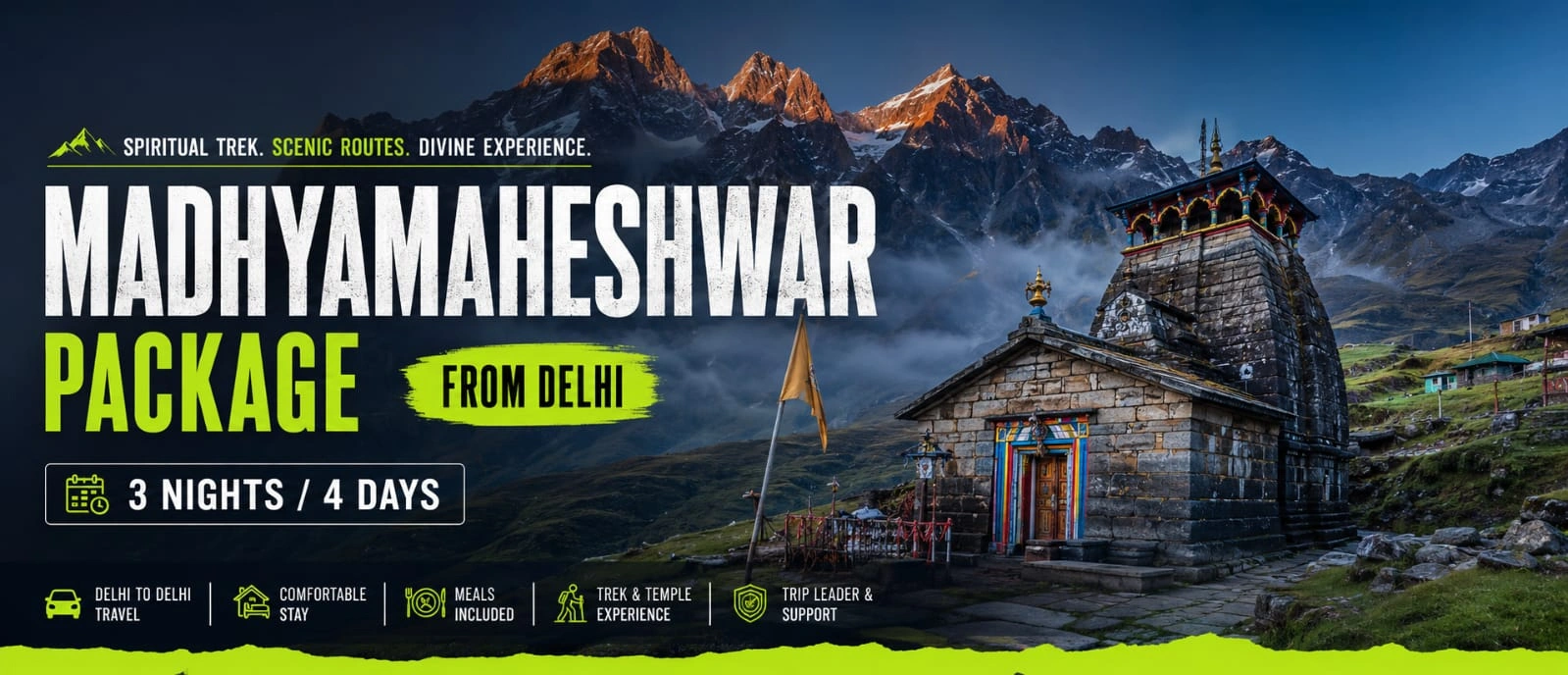
Madhyamaheshwar Temple
Second Kedar in the Panch Kedar pilgrimage circuit
Madhyamaheshwar Quick Facts
| Also known as | Madmaheshwar / Madhmaheshwar |
|---|---|
| Religious significance | Second of the Panch Kedar temples; according to tradition, the middle or navel portion of Lord Shiva is worshipped here. |
| Location | Rudraprayag district, Uttarakhand |
| Elevation | Approximately 3,289 m (11,473 ft), according to GMVN; published official figures may vary. |
| Practical trek base | Ransi village |
| 2026 opening date | 21 May 2026 |
| Winter worship | Omkareshwar Temple, Ukhimath |
| Budha Madhyamaheshwar | Separate sacred site near the main Madhyamaheshwar shrine |
| Typical planning windows | May–June and September–October, subject to weather and official access conditions |
Overview
Madhyamaheshwar Temple, also known as Madmaheshwar or Madhmaheshwar, is a sacred Lord Shiva shrine in Uttarakhand's Rudraprayag district. It is traditionally regarded as the second of the five Panch Kedar temples and remains an active place of worship in the Garhwal Himalayas.
According to the Panch Kedar tradition, the middle or navel portion of Lord Shiva is believed to have appeared at Madhyamaheshwar. The temple is located in a remote Himalayan setting, with Ransi village commonly used as the practical base for the present-day journey.
For detailed information about the walking route and distance, see our Madhyamaheshwar Trek Route Guide and Madhyamaheshwar Trek Distance Guide.
During winter, the main high-altitude temple closes and the ceremonial worship associated with Madhyamaheshwar continues at Omkareshwar Temple in Ukhimath. Budha Madhyamaheshwar is a separate sacred site and is not the winter seat.
History and Religious Significance
Madhyamaheshwar's religious identity is rooted in the traditional Panch Kedar story associated with Lord Shiva and the Pandavas. The shrine remains an active place of worship and holds an important position in the pilgrimage traditions of the Garhwal Himalayas.
The traditional account connects the temple with the Pandavas following the Kurukshetra war. According to this sacred tradition, the Pandavas sought Lord Shiva, and the events that followed are associated with the manifestation of Shiva at five Himalayan locations that came to be known collectively as Panch Kedar.
Madhyamaheshwar occupies the second position in the traditional Panch Kedar sequence. Its principal religious association is with the middle or navel portion of Lord Shiva, which devotees worship at the shrine. This belief belongs to the religious tradition surrounding the temple and should be understood as sacred tradition rather than independently documented modern history.
The temple's importance comes from its continuing role in worship as well as its place within the wider Panch Kedar pilgrimage. Travellers planning the complete circuit can use our Panch Kedar Yatra Guide to understand the relationship between the five shrines.
Legend
The traditional story of Panch Kedar is linked to the aftermath of the Mahabharata war. The Pandavas are said to have sought Lord Shiva after the conflict to seek forgiveness for the bloodshed and loss of life.
According to the legend, Shiva did not wish to appear before them and took the form of a bull before retreating into the Himalayan region. When the Pandavas eventually recognised and approached him, Shiva is traditionally believed to have disappeared into the ground, with different parts of his divine form becoming associated with five Himalayan locations.
These five locations became the Panch Kedar shrines. At Madhyamaheshwar, tradition holds that the middle or navel portion of Lord Shiva appeared, giving the shrine its distinctive religious association within the circuit.
This account is a sacred religious tradition rather than a modern historical record. Devotees continue to visit Madhyamaheshwar because of its place in this tradition and its continuing role as an active Shiva shrine.
Temple Architecture
Madhyamaheshwar is a compact stone temple set within a high Himalayan landscape. Its architecture is relatively restrained, with the sanctum focused on the Shiva lingam that is worshipped during the open pilgrimage season.
The temple's stone construction and mountain setting give it a distinctive character. The surrounding landscape becomes increasingly open as visitors approach the higher section of the journey, with Himalayan ridges and peaks forming the backdrop around the shrine.
As an active place of worship, visitors should follow local customs regarding footwear, photography, temple access and worship areas.
Location
Madhyamaheshwar lies in the Garhwal Himalayas of Rudraprayag district, Uttarakhand. GMVN lists the shrine at approximately 3,289 metres (11,473 feet), although published official sources may use different elevation figures.
The temple has no direct road access, so visitors must complete the final approach on foot. Ransi village is commonly used as the practical trek base today.
Uttarakhand Tourism and other sources have historically described different trailheads and route measurements, which is why published trek distances can vary. For current route planning, use the dedicated Madhyamaheshwar Trek Route Guide and Madhyamaheshwar Trek Distance Guide.
How to Reach Madhyamaheshwar
Most journeys to Madhyamaheshwar approach the region through Rishikesh or Haridwar before continuing through the Garhwal Himalayas toward Rudraprayag, Ukhimath and the trek base.
| By air | Jolly Grant Airport in Dehradun is the nearest major airport generally used for this region. |
|---|---|
| By rail | Rishikesh is the nearest commonly used railhead for the Madhyamaheshwar journey. |
| By road | Travellers generally continue through Rishikesh/Haridwar, Srinagar and Rudraprayag toward Ukhimath and then onward toward the trek base. |
| Trek base | Ransi is commonly used as the practical base for the present-day Madhyamaheshwar trek. |
Mountain road conditions can change because of rainfall, landslides, traffic restrictions and local road works. Confirm the current motorable endpoint and transport availability before beginning the walking section.
For detailed transportation options from major starting cities, see our How to Reach Madhyamaheshwar from Delhi, Haridwar, Rishikesh & Dehradun .
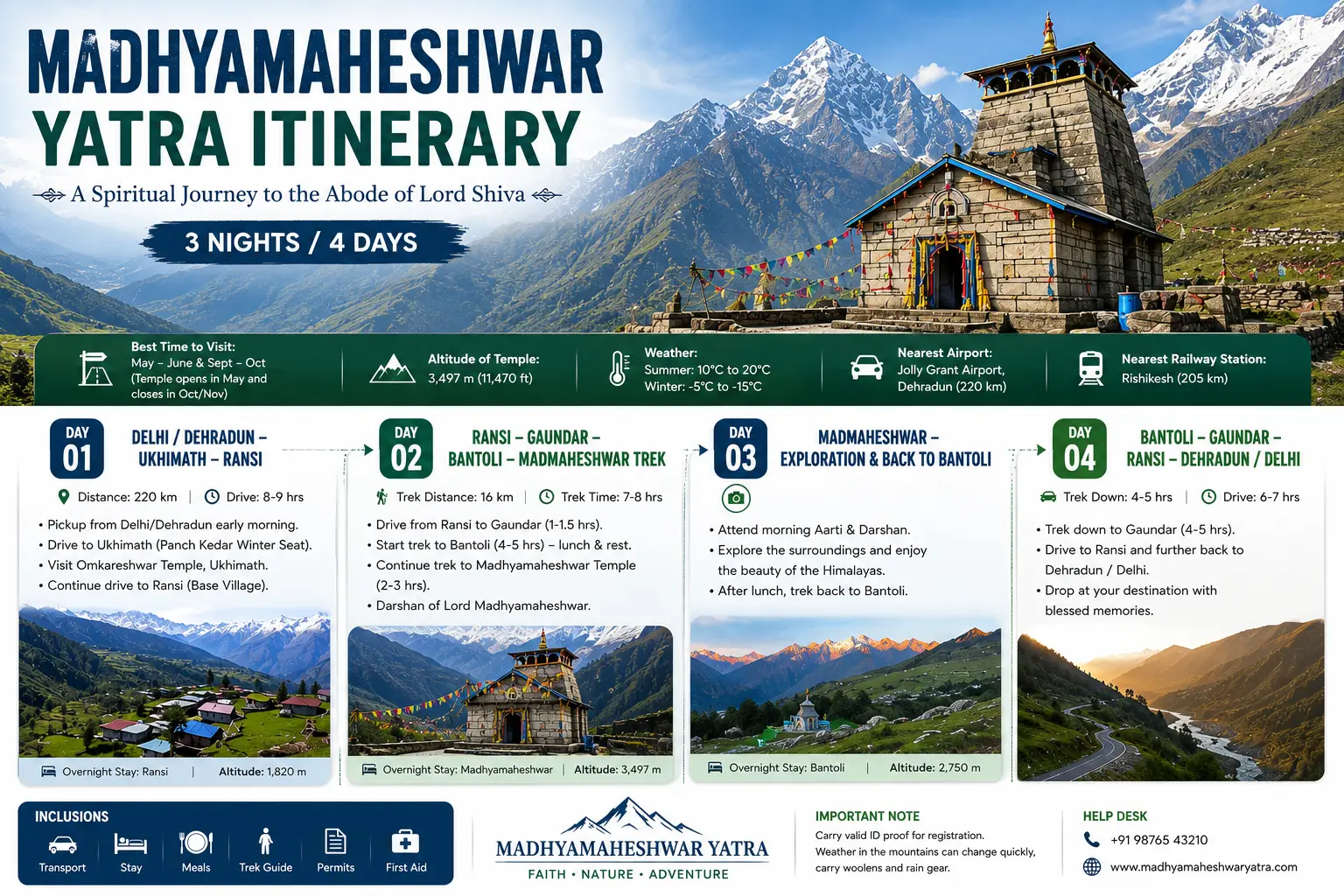
For planning the number of days around the journey, see our Madhyamaheshwar Yatra Itinerary .
2026 Opening Status and Temple Timings
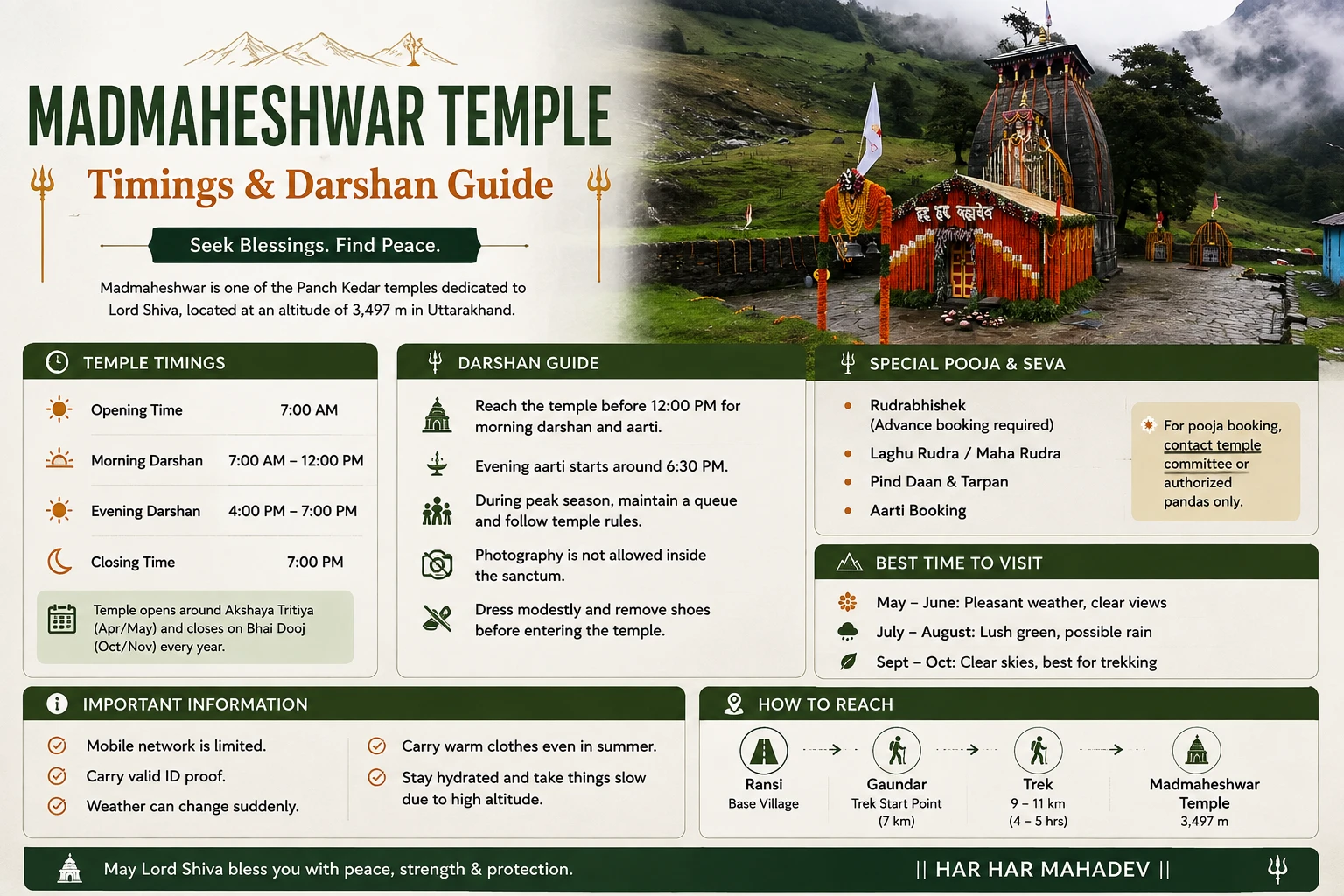
Madhyamaheshwar Temple opened for the 2026 pilgrimage season on 21 May 2026. The temple closes again for winter, with the annual closing date announced separately according to the seasonal religious calendar.
Daily darshan and aarti timings can vary according to local temple rituals and operational conditions. Travellers should confirm the current schedule before planning their journey around a particular worship time.
For the latest seasonal information, see our Madhyamaheshwar Opening and Closing Dates 2026 Guide .
During the winter closure, the ceremonial worship associated with Madhyamaheshwar continues at Omkareshwar Temple in Ukhimath .
Madhyamaheshwar Trek Route
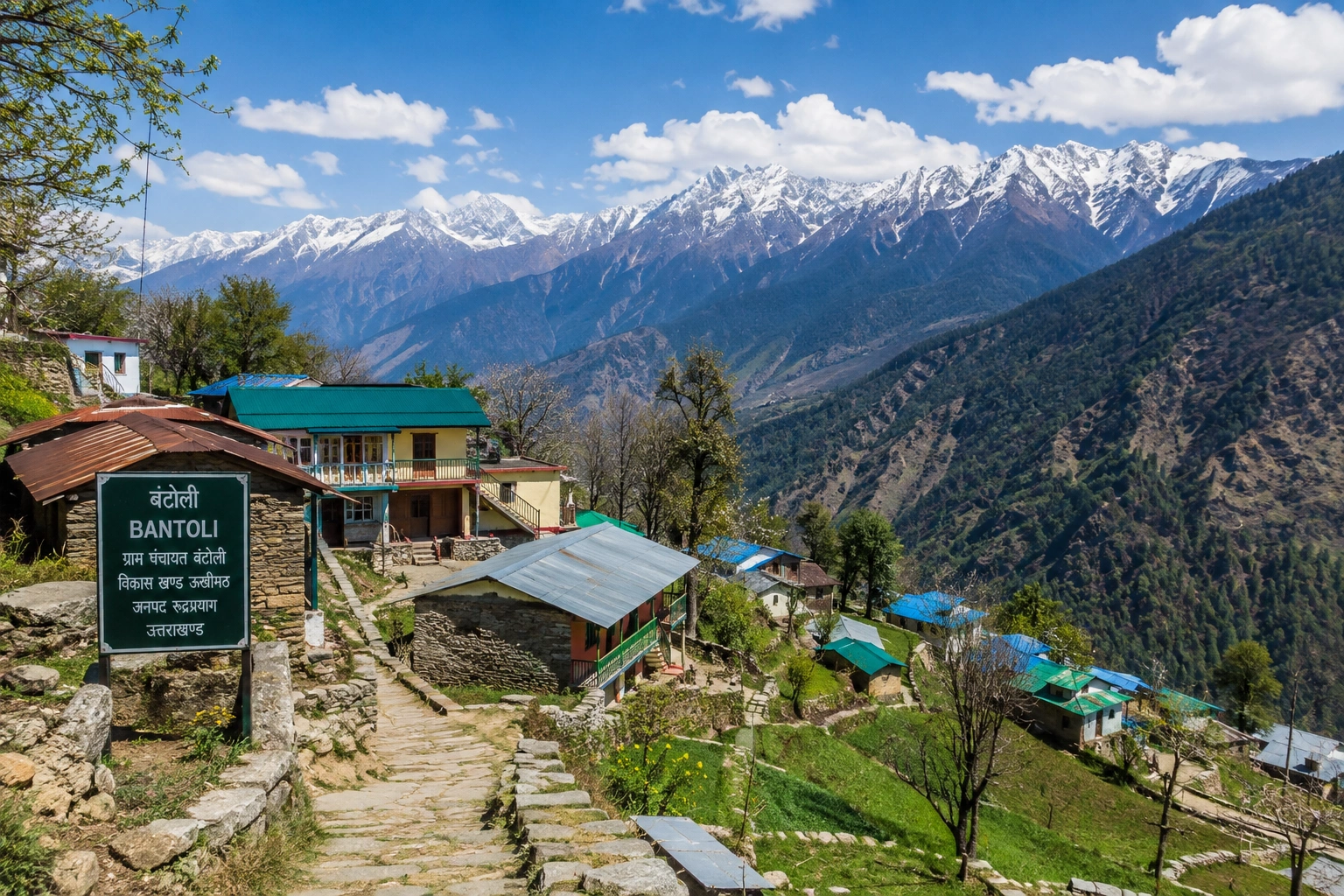
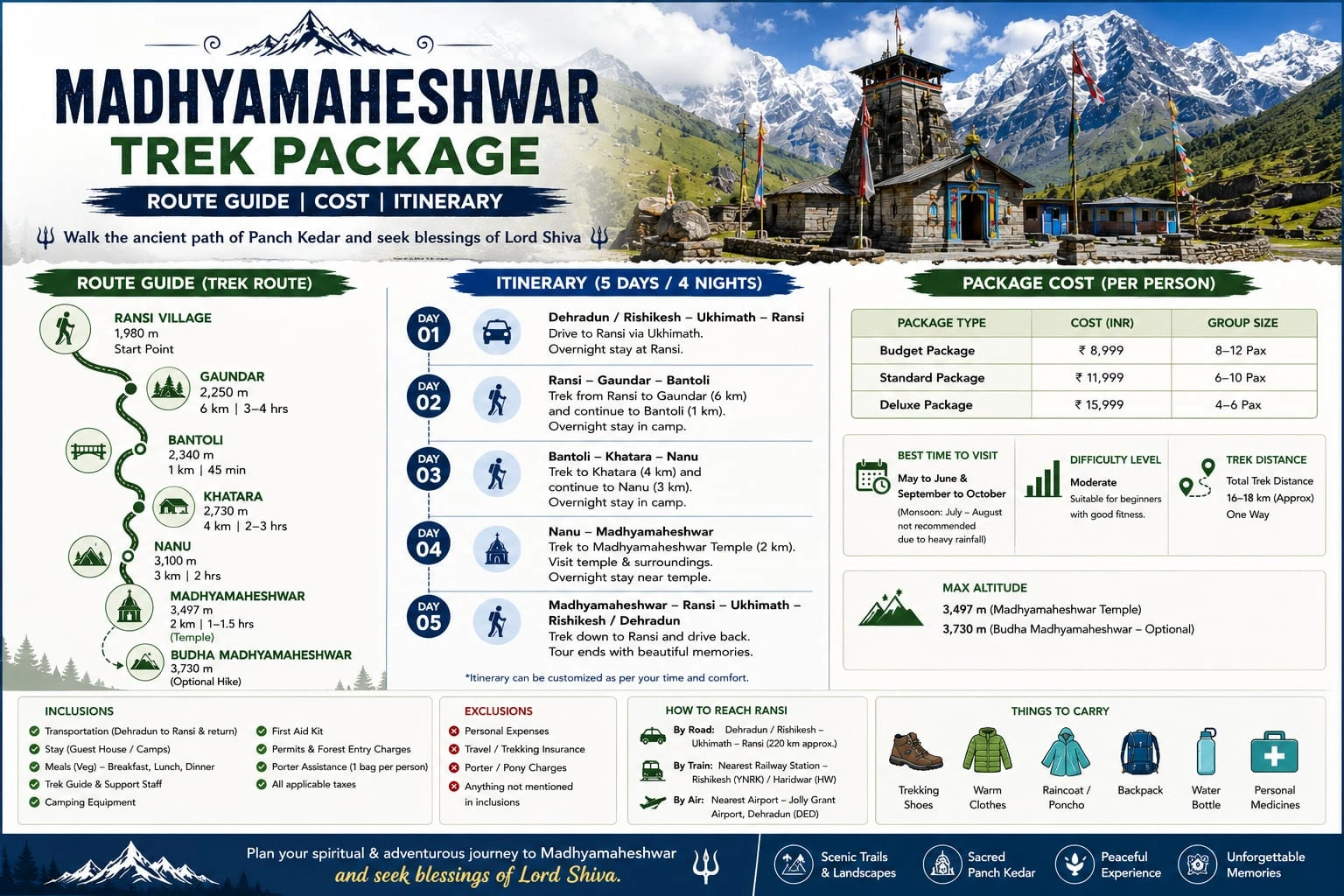
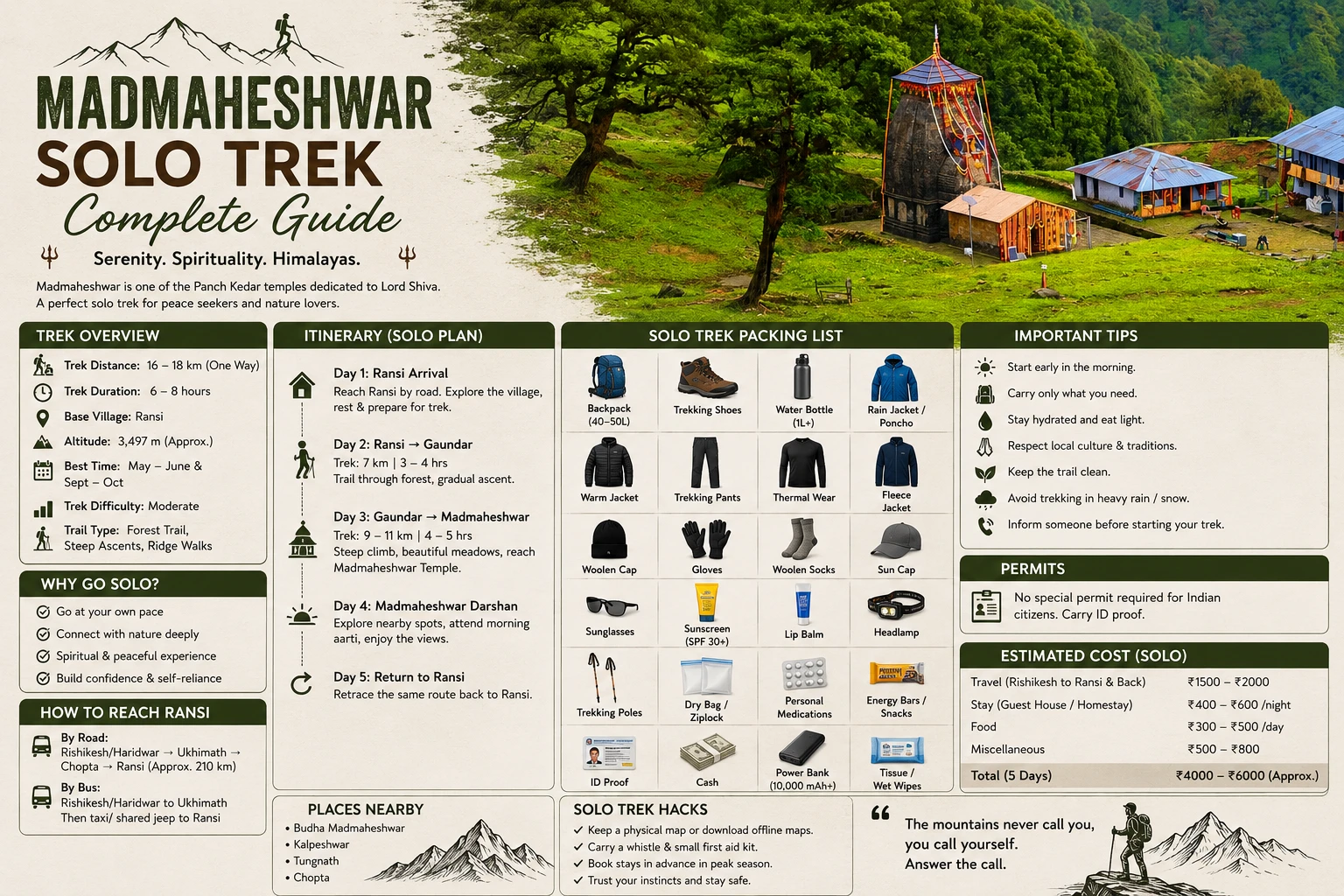
Ransi is widely used as the practical base for the present-day Madhyamaheshwar trek. From Ransi, the trail continues through the valley toward Gaundhar and Bantoli before climbing toward the upper settlements and the temple area.
The route includes sustained ascent, uneven mountain terrain and changing conditions as the trail gains elevation. The walking experience also changes along the journey, moving from lower forested sections toward more open Himalayan terrain.
Published trek distances can differ depending on the starting point and route measurement used. For that reason, travellers should use the dedicated Madhyamaheshwar Trek Distance Guide together with the Madhyamaheshwar Trek Route Guide.
Route-specific information is also available through our Gaundhar Village Guide, Khatara Village Guide and Nanu Chatti Guide.
Travellers who want to assess the physical demands before planning the journey can read the Madhyamaheshwar Trek Difficulty Guide.
Best Time to Visit Madhyamaheshwar
For most pilgrims and trekkers, May–June and the post-monsoon period from September into October are the most practical planning windows.
July and August bring monsoon conditions to Uttarakhand, which can make mountain roads and trekking trails more difficult. Rain can also affect visibility and travel schedules.
As winter approaches, temperatures fall and snowfall can make access to the main temple impractical. The shrine closes for the winter season and worship continues at the designated winter location in Ukhimath.
For detailed seasonal planning, see our Best Time to Visit Madhyamaheshwar Guide .
Things to Carry
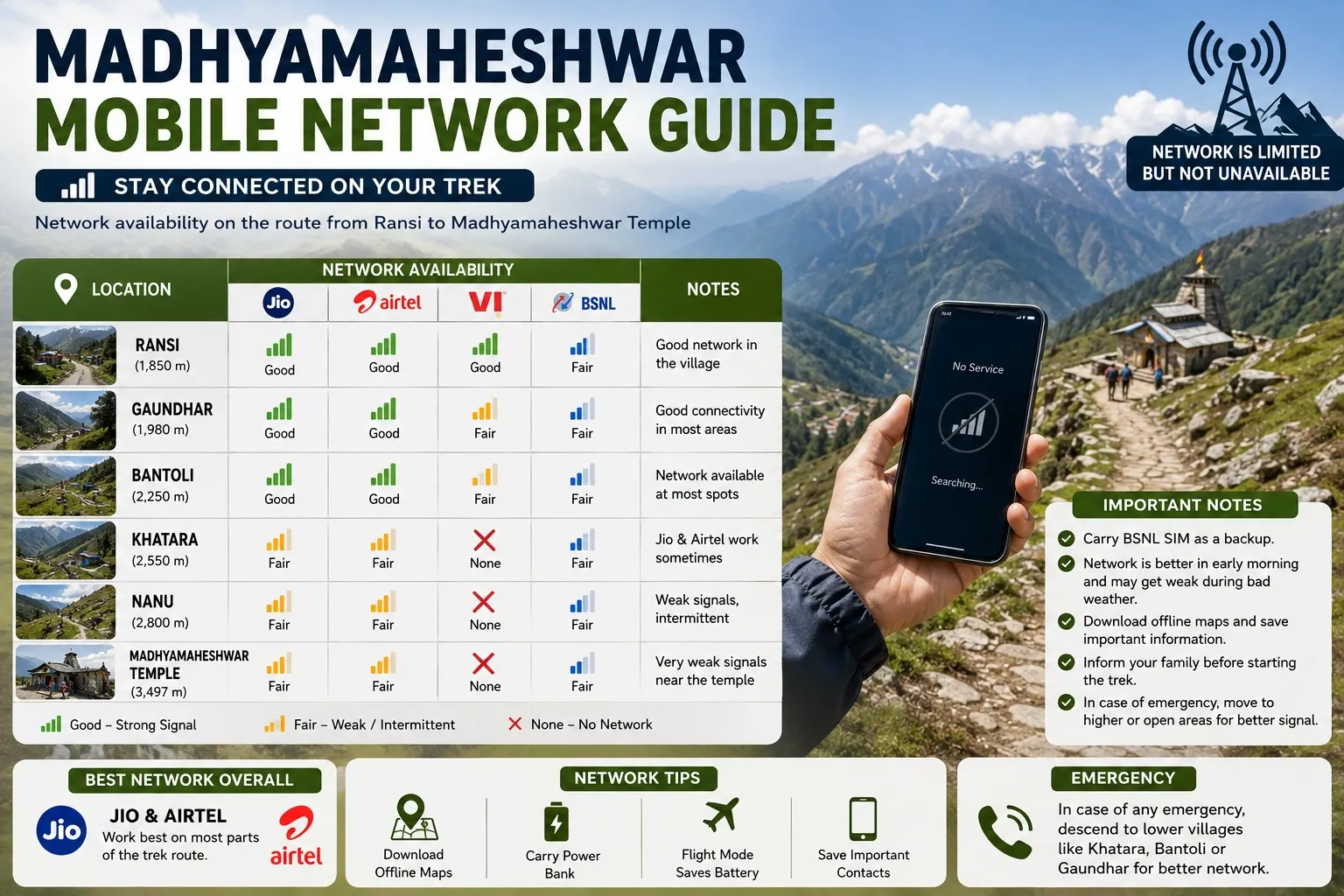
Services become more limited as you move away from the main road-connected areas, so carry the essential equipment required for your planned journey.
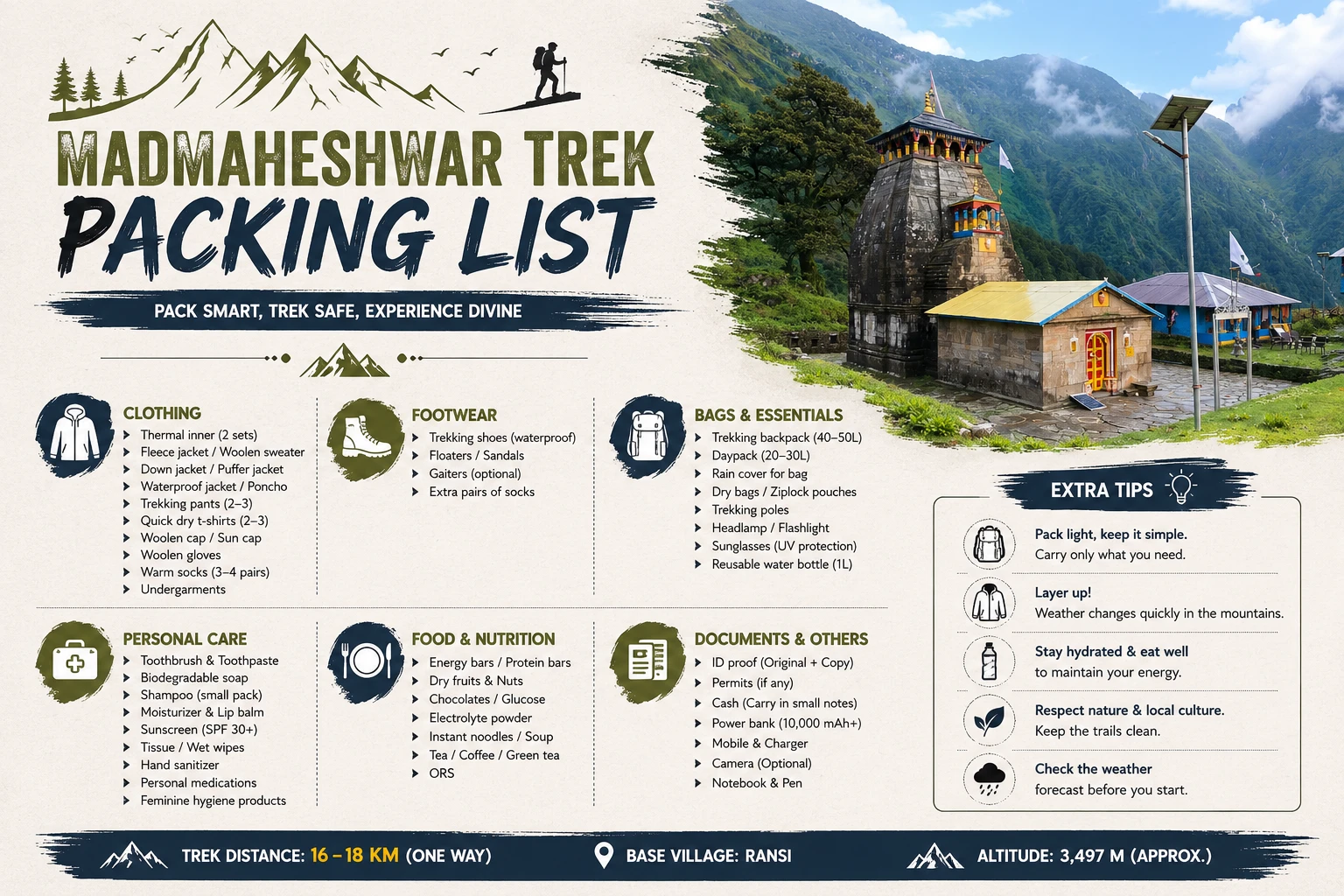
Basic items include well-gripped trekking shoes, warm layers, a waterproof outer layer, a headlamp, refillable water bottle, sunscreen, sunglasses and a small first-aid kit.
Trekking poles can be useful on steep or uneven sections. Carry sufficient cash because mobile connectivity and digital payment facilities can become unreliable in remote areas.
Pack according to the season, your itinerary and your own requirements rather than relying on a generic checklist.
For information about the physical demands of the journey, see our Madhyamaheshwar Trek Difficulty Guide .
Food Available on the Route
Ukhimath and Ransi generally provide more food options before the main walking section. Along the trekking route, food availability is simpler and depends on local homestays, seasonal dhabas and the facilities operating at individual halts.
Basic meals and snacks may include dal, rice, roti, vegetables, tea and other simple local food. Availability should not be assumed at every stop.
The Rudraprayag district information advises travellers to carry provisions for the temple area from Gaundhar. Carry emergency snacks and sufficient drinking-water arrangements rather than relying entirely on food services near the shrine.
Weather
Madhyamaheshwar is a high-altitude Himalayan destination where weather can change quickly.
May and June are generally favourable for pilgrimage travel before the main monsoon period. July and August can bring heavier rainfall, slippery trails, poor visibility and disruption to mountain roads.
September and October generally provide another useful travel window after the main monsoon period, although conditions can still vary from year to year.
The weather widget at the top of this page shows Ransi trek-base weather, not conditions at the temple itself. Travellers should check a fresh mountain forecast and current road and trail information before departure.
For month-by-month information, see our Madhyamaheshwar Weather Guide .
Where to Stay
Accommodation along the Madhyamaheshwar route is basic and varies according to location and season.
Ukhimath generally provides the widest choice of hotels and guesthouses before the trek. Ransi and Gaundhar mainly have smaller homestays and basic accommodation, while facilities close to the temple are considerably more limited.
Ukhimath
Ukhimath is a practical pre-trek halt for many travellers. Government-run and private accommodation may be available, but current room availability and prices should be confirmed before travelling.
Ransi and Gaundhar
Ransi and Gaundhar offer locally operated homestays and simple guest accommodation. Availability can become limited during busy pilgrimage periods, so travellers should confirm their planned halt in advance.
Near Madhyamaheshwar Temple
Accommodation near the shrine is basic and limited. Travellers should not expect conventional hotel facilities and should confirm what is operating during their travel dates.
For detailed location-by-location information, see our Madhyamaheshwar Accommodation Guide .
Nearby Attractions
The Madhyamaheshwar journey can be combined with other destinations in the Garhwal region if your itinerary allows sufficient time.
Ukhimath is particularly relevant to Madhyamaheshwar because the town is associated with the temple's winter worship tradition. Omkareshwar Temple is the principal winter worship location associated with Madhyamaheshwar.
Travellers approaching through the Alaknanda valley may also consider Devprayag Sangam or Dhari Devi Temple, depending on their road itinerary.
Those planning multiple Panch Kedar shrines can use the Panch Kedar Yatra Guide to understand the wider pilgrimage sequence.
Budha Madhyamaheshwar
Budha Madhyamaheshwar is a separate sacred site located near the main Madhyamaheshwar shrine and is commonly visited as an additional excursion.
The site is known for its Himalayan setting and wide mountain views. Travellers planning to visit it should allow additional walking time and consider daylight, weather and personal fitness before starting the additional section.
Budha Madhyamaheshwar is not the winter seat of Madhyamaheshwar. During the winter closure of the main temple, the ceremonial worship associated with Madhyamaheshwar continues at Omkareshwar Temple in Ukhimath .
For detailed information about the additional visit, see our Budha Madhyamaheshwar Temple Guide .
Madhyamaheshwar Yatra Cost
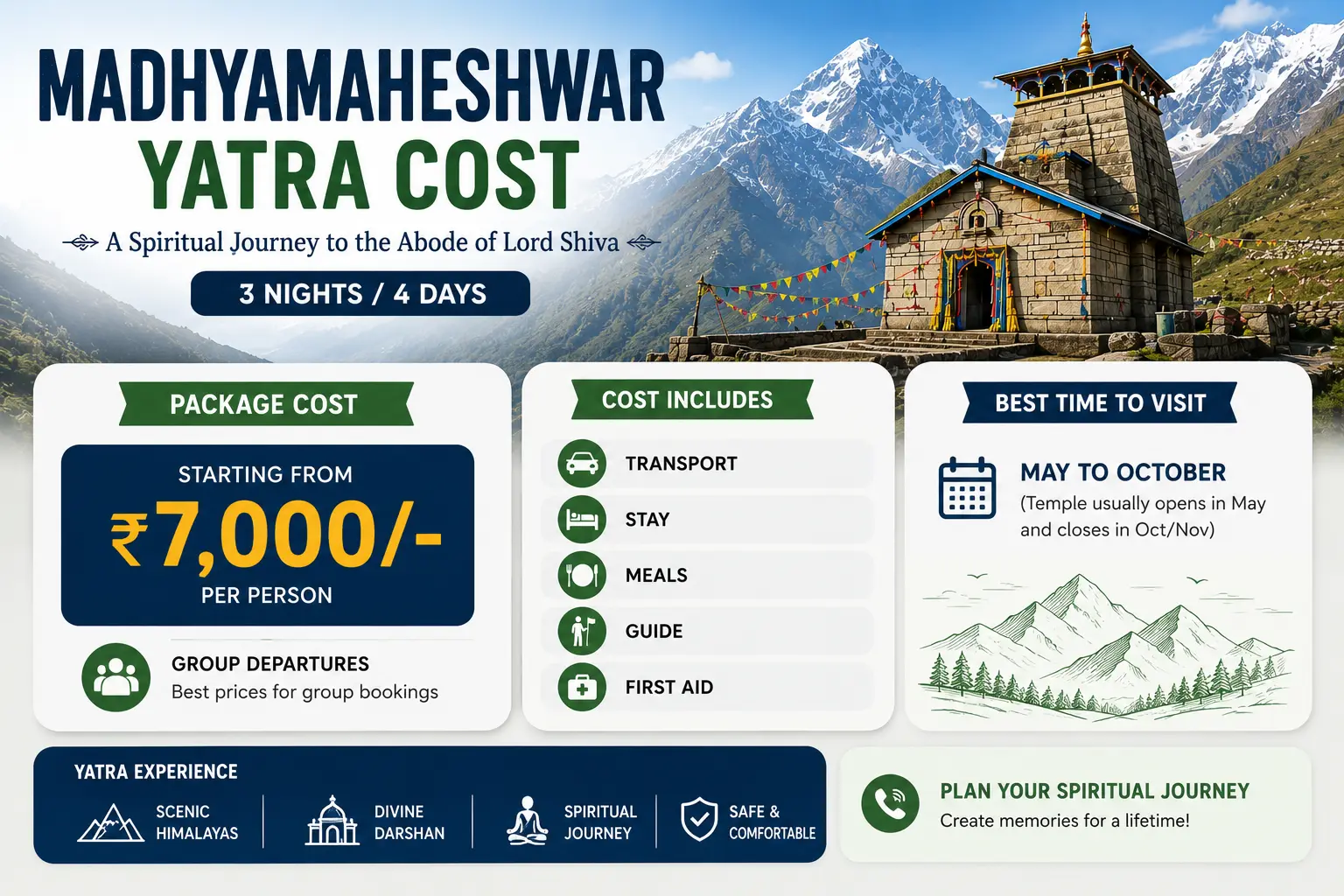
The total cost of a Madhyamaheshwar Yatra depends on the starting city, transportation, number of nights, accommodation and optional local services.
Travellers using shared transport and basic accommodation can keep the trip relatively economical, while private vehicles, better accommodation and longer itineraries increase the total budget.
For a complete breakdown of transportation, accommodation, food and other expenses, see our Madhyamaheshwar Yatra Cost Guide .
Frequently Asked Questions
1. Where is Madhyamaheshwar Temple?
Madhyamaheshwar Temple is located in Rudraprayag district in the Garhwal Himalayas of Uttarakhand.
2. Which Kedar is Madhyamaheshwar?
Madhyamaheshwar is traditionally regarded as the second Kedar in the Panch Kedar pilgrimage circuit.
3. Where does the Madhyamaheshwar trek start?
Ransi is commonly used as the practical trek base for the present-day journey. Published route information can vary because different sources use different trailheads and measurements.
4. When did Madhyamaheshwar Temple open in 2026?
Madhyamaheshwar Temple opened for the 2026 pilgrimage season on 21 May 2026.
5. Where is Madhyamaheshwar worshipped during winter?
During the winter closure of the main temple, the ceremonial worship associated with Madhyamaheshwar continues at Omkareshwar Temple in Ukhimath.
6. Is Budha Madhyamaheshwar the winter seat?
No. Budha Madhyamaheshwar is a separate sacred site near the main temple. The winter worship location associated with Madhyamaheshwar is Omkareshwar Temple in Ukhimath.
7. What is the best time to visit Madhyamaheshwar?
May–June and September–October are generally practical planning windows, subject to weather, road conditions and the temple's seasonal opening.
8. How long is the Madhyamaheshwar trek?
Published distances vary according to the trailhead and measurement used. Travellers should use the current Madhyamaheshwar Trek Distance Guide for detailed planning.
Official References for Trip Planning
For current or safety-sensitive information, travellers should cross-check destination details with relevant official sources.
Useful references include Uttarakhand Tourism's Madhyamaheshwar information, Rudraprayag District's official portal, GMVN and the Shri Badrinath-Kedarnath Temple Committee.
Official sources can publish different elevation or route measurements because they may use different trailheads, mapping methods or destination references. Where figures differ, this page uses approximate wording rather than presenting one disputed number as universally definitive.
Gallery


×
![Madhyamaheshwar gallery image]()
/